

Introduction
Artificial intelligence, automation, digital transformation, sustainability initiatives, and changing customer expectations are reshaping industries around the world.Businesses today are no longer competing only through products and pricing. They are competing through innovation, technology adoption, customer experience, data intelligence, and digital visibility. According to the World Economic Forum, technological innovation and digital transformation are among the most important factors driving future economic and business growth. At the same time, organizations that fail to adapt to rapidly evolving market trends risk losing competitiveness in the global economy. The rise of artificial intelligence, remote work, automation, and AI-powered search systems is creating a new era of business strategy where adaptability and innovation determine long-term success. Understanding the biggest business trends shaping the future is essential for entrepreneurs, startups, corporations, investors, and organizations seeking sustainable growth in the modern digital economy.
Artificial Intelligence Becoming the Foundation of Modern Business
Place an AI business image after the second paragraph of this section. Artificial Intelligence (AI) has become one of the most powerful forces transforming modern businesses. Companies worldwide are increasingly integrating AI-powered systems to improve operational efficiency, automate repetitive tasks, and enhance strategic decision-making. Major technology companies such as Microsoft, Google, and OpenAI continue investing billions of dollars into AI innovation, demonstrating the growing importance of artificial intelligence in future business growth.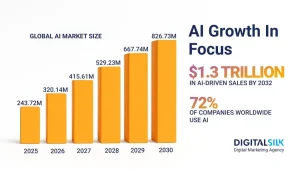
Modern businesses are using AI for:
-
- Predictive analytics
- Financial forecasting
- Customer support automation
- Personalized marketing
- Data analysis
- Business intelligence
- Market trend prediction
AI technologies are helping organizations reduce operational costs, improve productivity, and make faster business decisions. Companies that successfully adopt AI-driven business strategies are gaining significant competitive advantages in global markets. According to business analysts, AI is expected to reshape nearly every major industry over the next decade, including finance, healthcare, logistics, education, e-commerce, and digital marketing. Businesses that fail to integrate artificial intelligence into their operations may struggle to remain competitive in increasingly automated markets.
Digital Transformation Accelerating Global Business Growth
Place a digital transformation or smart office image after the bullet points. Digital transformation is no longer optional in the modern economy. Organizations across industries are rapidly adopting digital technologies to improve efficiency, scalability, customer engagement, and operational performance.
Companies investing heavily in digital infrastructure often experience:
-
- Faster scalability
- Increased operational efficiency
- Better customer experiences
- Improved profitability
- Stronger market positioning
According to McKinsey & Company, businesses that accelerate digital transformation strategies are more likely to outperform competitors in both revenue growth and customer retention. The rapid growth of cloud computing and digital services is also transforming how businesses communicate, manage operations, and deliver customer experiences globally. In the future economy, digital transformation will become a core survival strategy rather than a competitive advantage alone
Remote Work and the Future Workforce
Place a remote work or online meeting image at the beginning of this section. Remote work has permanently transformed the structure of the global workforce. Businesses today can hire talent from anywhere in the world, creating more flexible, scalable, and globally connected labor markets.
The rise of remote work has been accelerated by:
-
- Digital collaboration tools
- Cloud computing
- High-speed internet
- Virtual communication platforms
- AI-powered productivity systems
According to the World Economic Forum Future of Jobs Report, remote and hybrid work models are expected to remain a major component of the future workforce. Businesses that successfully adapt to flexible work environments will likely gain stronger talent acquisition and retention advantages.
Sustainability Becoming a Core Business Strategy
Place a green economy or renewable energy image after the first paragraph. Sustainability has become one of the most important business trends shaping the future global economy. Consumers, investors, and governments increasingly support organizations that prioritize environmentally responsible and socially sustainable business practices.
Modern sustainability strategies include:
-
- Renewable energy adoption
- Sustainable supply chains
- Carbon reduction initiatives
- Eco-friendly manufacturing
- Green technology investments
- ESG (Environmental, Social, and Governance) frameworks
According to the United Nations Sustainable Development Goals, sustainable economic growth and environmental responsibility are becoming essential priorities for the future global economy. The green economy is expected to create significant opportunities across industries such as renewable energy, transportation, manufacturing, and construction. Companies that ignore sustainability trends may face reputational risks and declining consumer trust in the future marketplace.
Data-Driven Decision Making Reshaping Business Strategy
Place a business analytics or financial dashboard image after the bullet points. Modern organizations increasingly rely on data analytics and business intelligence systems to guide strategic decisions.
Businesses today collect and analyze large amounts of data to:
-
- Understand customer behavior
- Predict market trends
- Improve marketing performance
- Reduce business risks
- Increase profitability
- Enhance operational efficiency
Advanced analytics combined with AI-powered systems allow organizations to make faster and more accurate business decisions.Data has become one of the most valuable assets in the digital economy. Businesses that effectively use data intelligence often outperform competitors because they can respond more quickly to market changes and consumer demands. According to Google Analytics and modern business intelligence platforms, data-driven strategies significantly improve decision-making accuracy and operational performance. As global markets become increasingly competitive, companies that fail to utilize data effectively may struggle to maintain long-term growth.
Customer Experience Becoming the Ultimate Competitive Advantage
Modern consumers expect personalized, fast, and seamless experiences across all digital platforms. Customer expectations continue to rise as businesses compete in increasingly saturated markets.
Organizations are now focusing on:
-
- Personalized marketing
- Faster customer support
- AI-powered communication
- Omnichannel experiences
- User-friendly digital platforms
- Customer engagement optimization
According to Harvard Business Review, businesses that prioritize customer experience often achieve stronger long-term profitability and market trust. Companies that fail to improve customer experiences may lose market share to more customer-focused competitors.
SEO, GEO, and AI Search Optimization Becoming Essential
Place an SEO analytics or AI search dashboard image after the first paragraph. The digital business environment is rapidly evolving as AI-powered search systems become more influential in how consumers discover information online.
Traditional SEO alone is no longer enough. Businesses must now optimize for:
-
- SEO (Search Engine Optimization)
- GEO (Generative Engine Optimization)
- AEO (Answer Engine Optimization)
- Semantic SEO
- NLP optimization
- AI-powered search systems
Businesses with strong digital visibility and AI-optimized content strategies are more likely to dominate future online markets. According to Google Search Central, modern search systems increasingly reward high-quality, user-focused content with clear structure and authoritative insights. The rise of AI search platforms such as ChatGPT, Gemini, and Perplexity is transforming how businesses approach content marketing and digital visibility.
Expert Analysis
One of the most important realities of the modern business world is that adaptability has become more valuable than size alone. Companies that innovate quickly and respond effectively to technological and market changes are more likely to achieve long-term success. The combination of artificial intelligence, automation, sustainability, digital transformation, and data intelligence is creating a highly competitive global business environment where innovation drives future growth. Organizations investing early in technology, workforce development, and digital visibility are positioning themselves as future market leaders in the rapidly evolving digital economy.
Frequently Asked Questions (FAQ)
What are the biggest business trends in 2026?
The most important business trends include artificial intelligence, digital transformation, sustainability, remote work, automation, and AI-powered business strategies.
Why is artificial intelligence important for businesses?
AI improves operational efficiency, productivity, automation, customer experiences, and strategic decision-making.
How does digital transformation improve business growth?
Digital transformation helps businesses improve scalability, operational performance, customer engagement, and profitability.
Why is sustainability important in modern business?
Consumers and investors increasingly support environmentally responsible companies, making sustainability a major competitive advantage.
What is GEO optimization?
GEO (Generative Engine Optimization) is the process of optimizing content for AI-powered search systems such as ChatGPT and Gemini.
Conclusion
The future of business will be shaped by innovation, artificial intelligence, digital transformation, sustainability, and changing customer expectations.Organizations that adapt quickly to modern business trends and invest in technology-driven strategies will gain major competitive advantages in future global markets. In the rapidly evolving digital economy, long-term business success depends on adaptability, strategic innovation, data intelligence, and the ability to respond effectively to changing market conditions. Businesses that understand these evolving trends today will become the leaders of tomorrow’s global economy.
